Description
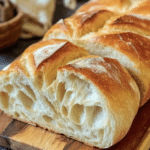
Soft, fluffy French bread is a delightful addition to any meal, featuring a tender crumb and a golden crust. Here’s a recipe to guide you through making this classic bread at home.
Ingredients
Units
Scale
- 2 cups warm water (110°F/45°C)
- 2 tablespoons active dry yeast
- 2 tablespoons granulated sugar
- 1 tablespoon salt
- 2 tablespoons olive oil
- 5 to 6 cups all-purpose flour
- 1 egg (optional, for egg wash)
Instructions
- Activate the Yeast:
- In a large mixing bowl, combine the warm water, yeast, and sugar. Stir gently and let the mixture sit for about 5 minutes until it becomes frothy, indicating that the yeast is active.
- Prepare the Dough:
- Add the salt and olive oil to the yeast mixture.
- Gradually incorporate the flour, one cup at a time, mixing well after each addition. Continue until a soft dough forms. The dough should be slightly sticky but manageable.
- Knead the Dough:
- Transfer the dough to a lightly floured surface.
- Knead for about 5-7 minutes until the dough becomes smooth and elastic. If the dough is too sticky, sprinkle in a little more flour as needed.
- First Rise:
- Place the kneaded dough into a lightly greased bowl, turning it to coat all sides.
- Cover the bowl with a clean kitchen towel or plastic wrap.
- Allow the dough to rise in a warm, draft-free area for about 1 hour, or until it has doubled in size.
- Shape the Loaves:
- Once risen, gently punch down the dough to release any air pockets.
- Divide the dough into two equal portions.
- On a lightly floured surface, roll each portion into a rectangle. Starting from a long edge, roll the dough tightly into a log. Pinch the seams and ends to seal.
- Second Rise:
- Place the shaped loaves seam-side down on a baking sheet lined with parchment paper or lightly greased.
- Cover the loaves with a kitchen towel.
- Let them rise for about 30 minutes, or until they’ve doubled in size.
- Prepare for Baking:
- Preheat your oven to 375°F (190°C).
- If using, beat the egg with a tablespoon of water to create an egg wash. Brush this mixture over the tops of the loaves to achieve a glossy, golden crust.
- Bake:
- Using a sharp knife, make three diagonal slashes across the top of each loaf.
- Place the baking sheet in the preheated oven.
- Bake for 20-25 minutes, or until the loaves are golden brown and sound hollow when tapped on the bottom.
- Cool:
- Remove the loaves from the oven and transfer them to a wire rack.
- Allow them to cool completely before slicing to maintain the bread’s structure and texture.
Notes
- Flour Measurement: Start with 5 cups of flour and add more as needed. The dough should be soft but not sticky.
- Rising Environment: If your kitchen is cool, you can create a warm environment by placing the dough in an oven with just the light on or setting the bowl over a pan of warm water.
- Storage: Store any leftover bread in an airtight container at room temperature for up to 3 days. For longer storage, wrap the loaves tightly in plastic wrap and aluminum foil, then freeze for up to 3 months.