
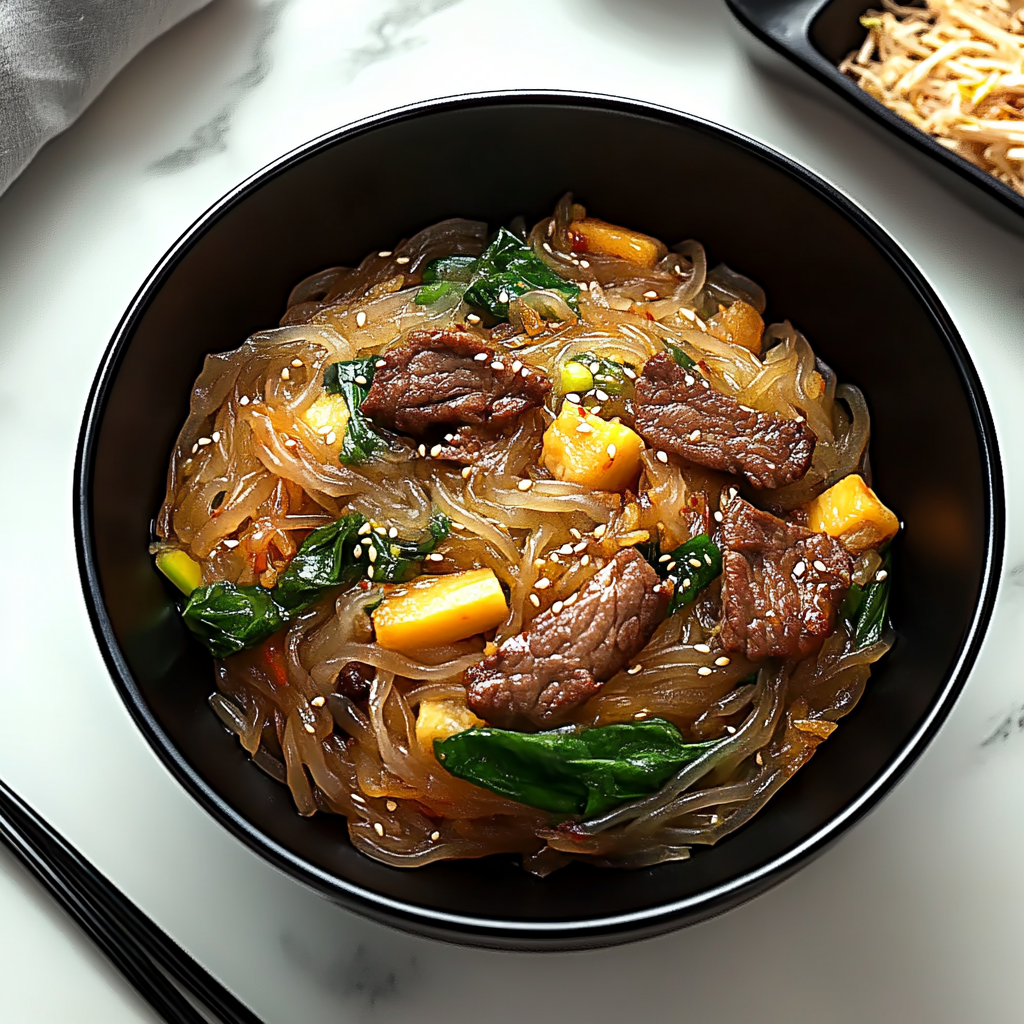
Korean Japchae Noodles is a classic and beloved Korean dish made with glass noodles (sweet potato starch noodles), stir-fried vegetables, and marinated beef in a savory-sweet sesame soy sauce. With its beautiful colors, balanced flavors, and chewy texture, Japchae is a must-try whether served hot or cold.
Why You’ll Love This Recipe
Japchae is naturally gluten-free, incredibly flavorful, and full of nutritious vegetables. It’s a great make-ahead dish that tastes even better the next day, making it perfect for parties, potlucks, or healthy weekly meal prep. Whether you include beef, keep it vegetarian, or switch up the veggies, it’s endlessly adaptable and always delicious.
ingredients
(Tip: You’ll find the full list of ingredients and measurements in the recipe card below.)
- Korean glass noodles (dangmyeon, made from sweet potato starch)
- Beef (ribeye, sirloin, or flank steak), thinly sliced
- Carrot, julienned
- Bell pepper, thinly sliced
- Spinach or baby spinach
- Onion, thinly sliced
- Shiitake mushrooms (fresh or dried) or other mushrooms
- Garlic, minced
- Soy sauce
- Sesame oil
- Sugar
- Cooking oil
- Sesame seeds
- Salt and pepper
directions

- Soak dried glass noodles in warm water for 20–30 minutes (or boil according to package instructions). Drain and set aside.
- In a bowl, marinate sliced beef with soy sauce, sesame oil, sugar, minced garlic, and pepper. Let sit for 15–20 minutes.
- Blanch spinach in boiling water for 30 seconds, then rinse under cold water. Squeeze out excess water and season lightly with salt and a dash of sesame oil.
- In a large pan or wok, heat cooking oil and stir-fry the vegetables separately until tender-crisp. Set each aside.
- Stir-fry the marinated beef until cooked through. Remove from pan.
- In the same pan, add a bit more oil if needed and stir-fry the drained noodles with soy sauce, sesame oil, and sugar. Toss to coat evenly.
- Add all cooked ingredients (vegetables, beef, spinach) back into the pan with the noodles and toss everything together until well combined and heated through.
- Garnish with sesame seeds before serving.
Servings and timing
Serves 4–6
Prep time: 25 minutes
Cook time: 15–20 minutes
Total time: 40–45 minutes
Variations
- Make it vegetarian or vegan by omitting beef and adding tofu or more mushrooms
- Add egg strips (thin omelet sliced into ribbons) for extra protein
- Use chicken or shrimp instead of beef for a different twist
- Add zucchini, green onions, or bean sprouts for more veggie variety
- Use tamari or gluten-free soy sauce for a gluten-free version
storage/reheating
Store in an airtight container in the refrigerator for up to 4 days.
To reheat, microwave or stir-fry briefly in a pan until warm. Add a splash of soy sauce or sesame oil if needed to refresh the flavor.
FAQs
What are Korean glass noodles made from?
Korean glass noodles (dangmyeon) are made from sweet potato starch, giving them a chewy, slippery texture and a translucent appearance when cooked.
Can I use other noodles?
For authentic Japchae, use sweet potato noodles. However, in a pinch, rice noodles or vermicelli can be used, though the texture will differ.
Is Japchae served hot or cold?
Japchae can be enjoyed warm, at room temperature, or cold. It’s very versatile and commonly served chilled during Korean celebrations.
Can I make Japchae ahead of time?
Yes, Japchae is great for make-ahead meals. The flavors deepen as it rests, and it’s delicious the next day.
How do I keep noodles from sticking?
Toss noodles in sesame oil after cooking to keep them from clumping and to add flavor.
What meat is best for Japchae?
Thinly sliced beef like ribeye, sirloin, or flank steak is most common. Ensure it’s tender and marinated for best results.
Can I freeze Japchae?
Freezing is not recommended as the noodles can become mushy. It’s best stored in the fridge and consumed within a few days.
What vegetables are typically used?
Common vegetables include carrots, spinach, onions, mushrooms, and bell peppers. You can adjust based on what you have on hand.
What’s the difference between Japchae and other stir-fried noodles?
Japchae uses glass noodles and has a distinctive sweet-savory flavor with sesame oil and soy sauce, unlike soy-heavy or spicy stir-fries.
Can I use store-bought Japchae sauce?
Yes, store-bought sauces can save time, but homemade is usually fresher and more customizable.
Conclusion
Korean Japchae Noodles are a colorful, healthy, and crowd-pleasing dish that’s packed with flavor and texture. Whether you’re new to Korean cooking or looking for a satisfying noodle dish with a twist, Japchae delivers on all fronts. It’s versatile, nourishing, and absolutely delicious—definitely a recipe worth adding to your rotation.
Print
Korean Japchae Noodles
- Prep Time: 20 minutes
- Cook Time: 20 minutes
- Total Time: 40 minutes
- Yield: 4 servings 1x
- Category: Main Dish
- Method: Stir-Fry
- Cuisine: Korean
- Diet: Halal
Description
Korean Japchae is a flavorful and colorful stir-fried noodle dish made with sweet potato glass noodles, assorted vegetables, and sometimes beef or tofu, all tossed in a savory-sweet soy-based sauce.
Ingredients
- 8 oz Korean sweet potato noodles (dangmyeon)
- 1 tablespoon sesame oil (for noodles)
- 1/2 lb beef (ribeye or sirloin), thinly sliced (optional)
- 2 tablespoons soy sauce (for beef)
- 1 teaspoon sugar (for beef)
- 1 tablespoon sesame oil (for beef)
- 2 tablespoons vegetable oil (divided)
- 1/2 onion, thinly sliced
- 1 medium carrot, julienned
- 1 red bell pepper, thinly sliced
- 2 cups spinach
- 3 cloves garlic, minced
- 2 eggs, beaten and cooked into a thin omelet, sliced (optional)
- 2 green onions, chopped
- 2 tablespoons soy sauce (for sauce)
- 1 tablespoon sugar (for sauce)
- 1 tablespoon sesame oil (for sauce)
- 1 tablespoon toasted sesame seeds
- Salt and pepper to taste
Instructions
- Cook sweet potato noodles according to package instructions. Drain, rinse with cold water, and toss with 1 tablespoon sesame oil to prevent sticking. Set aside.
- In a small bowl, marinate the beef with 2 tablespoons soy sauce, 1 teaspoon sugar, and 1 tablespoon sesame oil. Set aside for 15 minutes.
- Heat 1 tablespoon oil in a pan over medium-high heat. Cook the marinated beef until browned. Remove and set aside.
- In the same pan, add another tablespoon of oil. Stir-fry onion, carrot, and bell pepper for 3–4 minutes until tender-crisp. Add spinach and garlic, cooking until wilted. Remove from heat.
- In a large bowl, combine the cooked noodles, beef, vegetables, and sliced egg.
- In a small bowl, mix 2 tablespoons soy sauce, 1 tablespoon sugar, and 1 tablespoon sesame oil. Pour over the noodle mixture and toss well to combine.
- Top with chopped green onions and toasted sesame seeds. Serve warm or at room temperature.
Notes
- Use tofu instead of beef for a vegetarian version.
- Japchae can be made ahead and served cold or reheated.
- Add mushrooms like shiitake or wood ear for more umami.
- Adjust soy sauce and sugar to taste preference.
Nutrition
- Serving Size: 1 serving
- Calories: 420
- Sugar: 8g
- Sodium: 720mg
- Fat: 18g
- Saturated Fat: 4g
- Unsaturated Fat: 12g
- Trans Fat: 0g
- Carbohydrates: 48g
- Fiber: 3g
- Protein: 18g
- Cholesterol: 80mg