
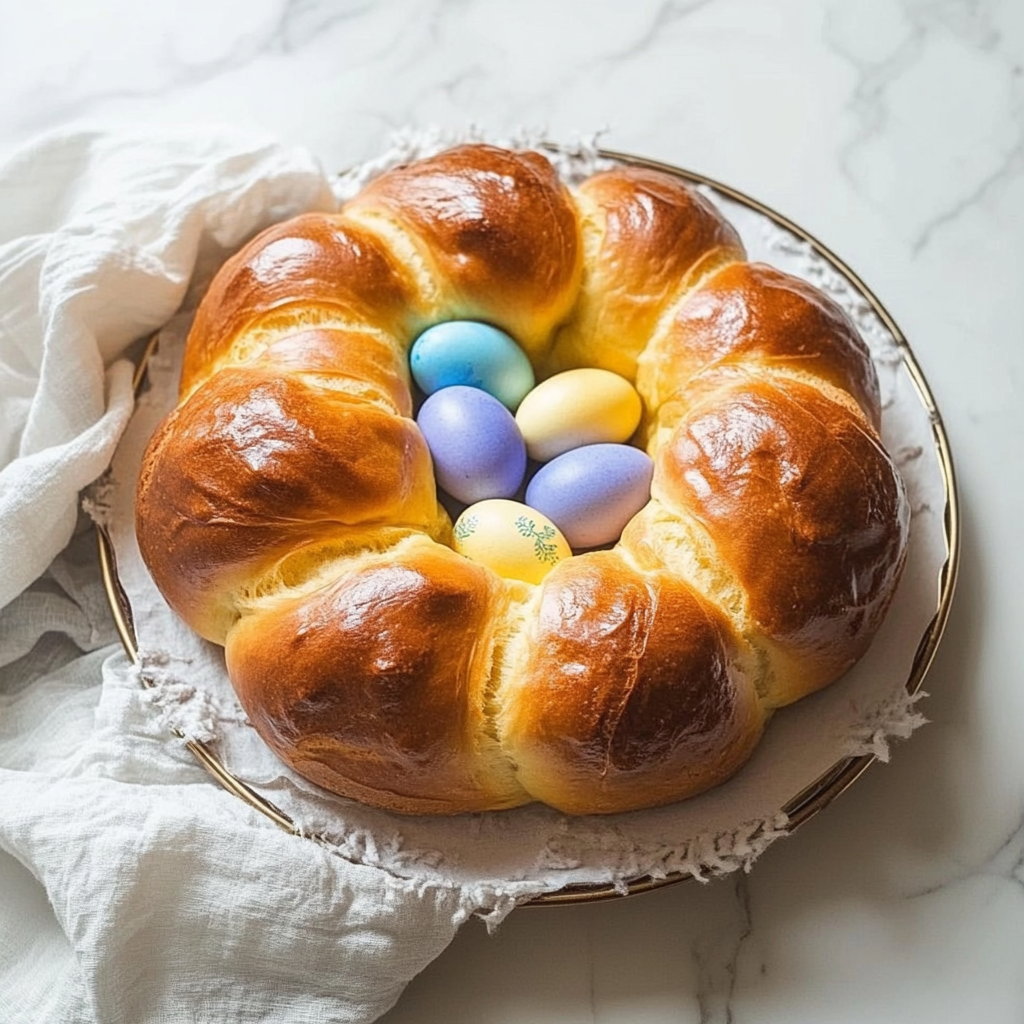
Easter Bread is a festive and traditional sweet bread enjoyed in many cultures around the world during the Easter season. Known for its soft, fluffy texture and beautiful braided shape, this bread is often adorned with dyed eggs and sprinkles, making it a stunning centerpiece for your holiday table.
Why You’ll Love This Recipe
- Visually stunning: Braided bread with colorful eggs adds a decorative touch to your Easter celebration.
- Soft and sweet: The dough is rich, slightly sweet, and fluffy, perfect for breakfast or dessert.
- Customizable: Add citrus zest, spices, or dried fruit to make it your own.
- Fun to make: A great project to do with family, especially kids who can help decorate the eggs.
- Tradition-rich: A meaningful way to celebrate Easter and spring with loved ones.
Ingredients
(Tip: You’ll find the full list of ingredients and measurements in the recipe card below.)
- 1 cup warm milk (110°F)
- ½ cup granulated sugar
- 2¼ teaspoons active dry yeast
- 4½ cups all-purpose flour
- ½ teaspoon salt
- 2 large eggs
- ¼ cup unsalted butter, melted
- 1 teaspoon vanilla extract
- Optional: zest of 1 lemon or orange
- 4-6 uncooked dyed eggs (decorative)
- Egg wash (1 egg beaten with 1 tablespoon water)
- Sprinkles (optional)
Directions

- Activate yeast: In a large bowl, mix warm milk with 1 tablespoon sugar. Sprinkle yeast over the top and let sit for 5-10 minutes until foamy.
- Make the dough: Stir in remaining sugar, eggs, melted butter, vanilla, salt, and citrus zest if using. Gradually add flour until a soft dough forms.
- Knead: Knead the dough on a floured surface for 8-10 minutes until smooth and elastic. Place in a greased bowl, cover, and let rise in a warm place until doubled, about 1 hour.
- Shape the bread: Punch down the dough and divide into 3 equal pieces. Roll each piece into a 14-16 inch rope. Braid the ropes together and form into a circle or leave straight. Transfer to a parchment-lined baking sheet.
- Add eggs: Tuck the dyed uncooked eggs gently into the braid.
- Second rise: Cover loosely and let rise again for 30-45 minutes.
- Bake: Preheat oven to 350°F. Brush the dough with egg wash (avoiding the eggs) and add sprinkles if using. Bake for 25-30 minutes, until golden brown and cooked through.
- Cool and serve: Let cool on a wire rack before slicing and serving.
Servings and Timing
- Servings: 10–12
- Prep Time: 30 minutes
- Rise Time: 1½ to 2 hours
- Bake Time: 25–30 minutes
- Total Time: Approximately 3 hours
Variations
- Italian-style: Add anise extract and colored sprinkles for a traditional Italian Easter bread.
- Greek tsoureki: Flavor with mahleb and mastic for a Greek version.
- Filled bread: Add a sweet filling like cinnamon sugar or dried fruit for extra flavor.
- Mini breads: Make individual braided rings for personal servings.
Storage/Reheating
- Room temperature: Store in an airtight container for up to 3 days.
- Freezer: Wrap tightly and freeze for up to 1 month. Thaw at room temperature.
- Reheat: Toast slices or warm in the oven at 300°F for a few minutes.
FAQs
Do I need to cook the dyed eggs before placing them in the bread?
No, use raw dyed eggs. They will cook in the oven along with the bread.
Can I use store-bought Easter eggs?
Only if they are safe to bake with—avoid plastic or ceramic decorative eggs. Use real eggs for best results.
What kind of food coloring is best for dyeing the eggs?
Liquid or gel food coloring works well. Combine with vinegar and hot water for vibrant results.
Can I make the dough ahead of time?
Yes, you can prepare the dough and refrigerate it overnight after the first rise. Let it come to room temperature before shaping.
Is Easter Bread supposed to be sweet?
Yes, it is a mildly sweet bread, similar in texture to challah or brioche.
Can I skip the eggs on top?
Yes, the eggs are decorative. You can make the bread without them if you prefer.
What’s the meaning behind the Easter Bread?
The bread symbolizes new life and rebirth, and the eggs represent fertility and renewal, both themes of Easter.
Can I use instant yeast instead of active dry?
Yes, use the same amount and skip the blooming step. Mix it directly into the dry ingredients.
How do I keep the bread soft?
Store it in an airtight container or wrap it in plastic wrap to keep it from drying out.
Can kids help make this?
Definitely! Kids love braiding the dough and dyeing the eggs—this is a great family baking activity.
Conclusion
Easter Bread is more than just a recipe—it’s a celebration of spring, tradition, and togetherness. With its golden crust, braided shape, and colorful eggs, this bread is both delicious and symbolic. Whether you’re carrying on a cultural tradition or starting a new one, Easter Bread is a beautiful addition to your holiday table.
Print
Easter Bread
- Prep Time: 25 minutes
- Cook Time: 30 minutes
- Total Time: 2 hours 30 minutes
- Yield: 1 loaf (8 servings) 1x
- Category: Bread
- Method: Baking
- Cuisine: Italian
- Diet: Vegetarian
Description
A soft, slightly sweet braided bread traditionally served during Easter, often decorated with colorful eggs and a light glaze.
Ingredients
- 1 packet (2 1/4 tsp) active dry yeast
- 1/4 cup warm milk (110°F)
- 1/2 cup granulated sugar
- 1/4 cup unsalted butter, softened
- 3 large eggs
- 3 1/2 cups all-purpose flour
- 1/2 teaspoon salt
- 1/2 teaspoon vanilla extract
- 1/4 teaspoon ground nutmeg
- 1/4 cup warm water
- 6 dyed raw eggs (optional, for decoration)
- 1 egg, beaten (for egg wash)
Instructions
- In a small bowl, dissolve yeast in warm milk and let sit for 5-10 minutes until frothy.
- In a large mixing bowl, beat together sugar, butter, eggs, vanilla, and nutmeg until well combined.
- Add the yeast mixture and warm water to the bowl and mix in flour and salt gradually until a soft dough forms.
- Knead the dough on a floured surface for about 8 minutes until smooth and elastic.
- Place the dough in a greased bowl, cover, and let rise in a warm place for about 1 to 1.5 hours or until doubled in size.
- Punch down the dough and divide into 3 equal portions. Roll each portion into a rope and braid them together. Shape into a ring and pinch the ends to seal.
- Place on a greased baking sheet. If using, nestle dyed raw eggs into the braid. Cover and let rise for another 30-45 minutes.
- Preheat oven to 350°F (175°C). Brush the dough with beaten egg.
- Bake for 25-30 minutes or until golden brown. Let cool on a wire rack before serving.
Notes
- You can add a simple glaze of powdered sugar and milk once the bread has cooled.
- Decorative eggs should be raw and dyed before placing into the bread – they cook while the bread bakes.
- Try adding orange zest or lemon zest for extra flavor.
Nutrition
- Serving Size: 1 slice
- Calories: 260
- Sugar: 8g
- Sodium: 180mg
- Fat: 7g
- Saturated Fat: 3g
- Unsaturated Fat: 3g
- Trans Fat: 0g
- Carbohydrates: 40g
- Fiber: 1g
- Protein: 6g
- Cholesterol: 60mg