
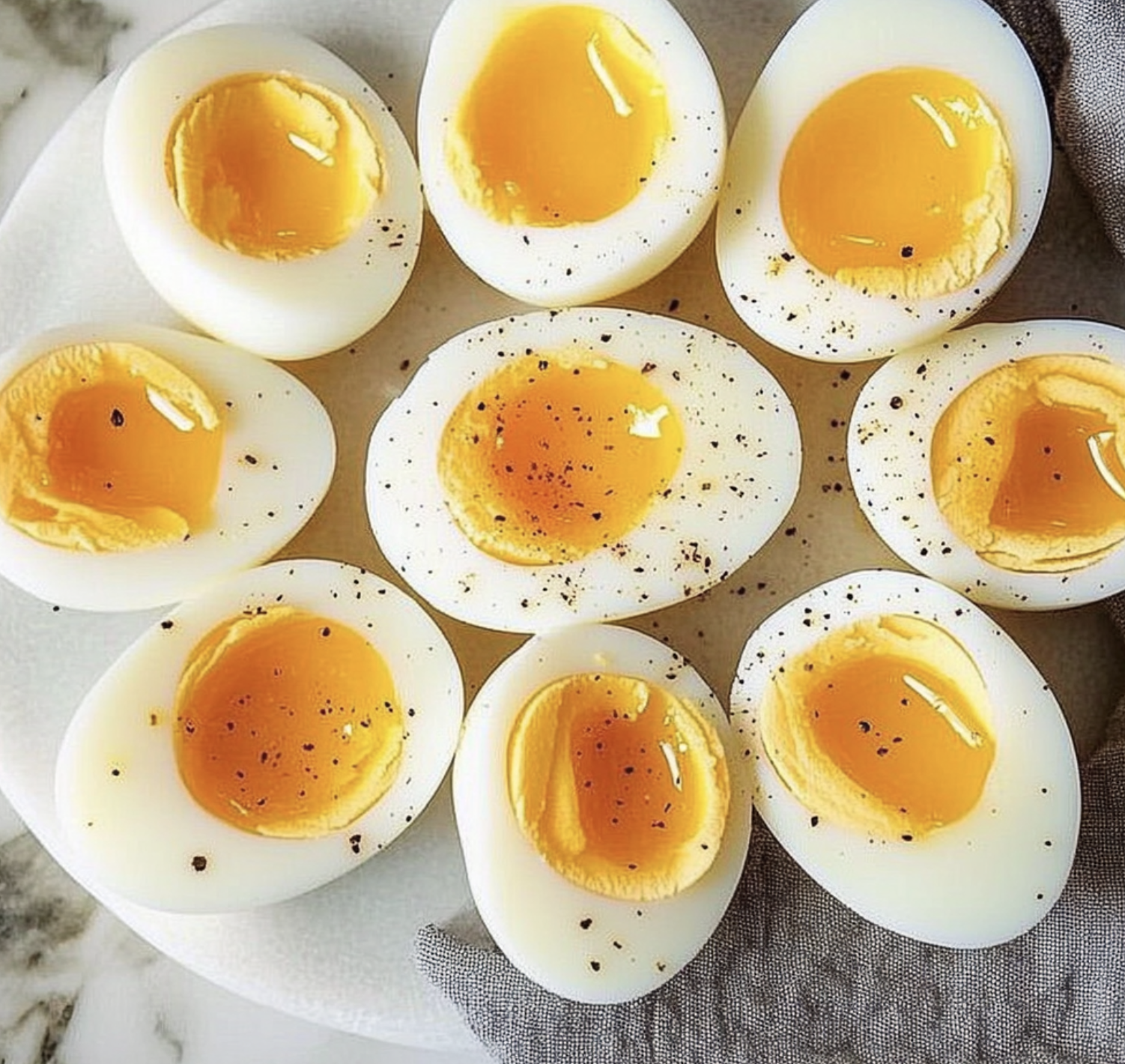
Perfect boiled eggs are a must-have in any kitchen. Whether you enjoy them soft and runny or hard with a firm yolk, this method delivers consistent results every time. They’re great for breakfast, snacks, salads, and more.
Why You’ll Love This Recipe
- Customizable doneness — soft, jammy, or hard-boiled
- Only two ingredients: eggs and water
- Easy to peel when done right
- Great for meal prep, snacks, or adding protein to meals
Ingredients
(Tip: You’ll find the full list of ingredients and measurements in the recipe card below.)
- Large eggs
- Water
- Ice (for an ice bath)
Directions

- Bring water to a boil
Fill a saucepan with enough water to cover the eggs by about 1 inch. Bring it to a boil over medium-high heat. - Add the eggs
Gently lower the eggs into the boiling water using a spoon to avoid cracking. - Boil and set a timer
Cook according to your preferred doneness:- Soft-boiled: 6 minutes
- Jammy eggs: 7–8 minutes
- Hard-boiled: 10–12 minutes
- Ice bath
Once time is up, immediately transfer the eggs to a bowl of ice water and let them sit for at least 5 minutes. This stops the cooking and makes peeling easier. - Peel and enjoy
Tap the eggs gently on a hard surface and peel under running water for best results.
Servings and Timing
- Servings: 4–6
- Prep Time: 2 minutes
- Cook Time: 6–12 minutes
- Total Time: 10–15 minutes
Variations
- Steamed Eggs: Steam eggs for 12 minutes for hard-boiled texture.
- Pressure Cooker: Use the 5-5-5 method (5 mins pressure, 5 mins natural release, 5 mins ice bath).
- Seasoned Eggs: Soak peeled eggs in soy sauce or marinade for extra flavor.
Storage/Reheating
- Storage: Store unpeeled boiled eggs in the fridge for up to 1 week. If peeled, keep in an airtight container with a damp paper towel and use within 2–3 days.
- Reheating: Gently reheat peeled eggs in warm water or microwave in short bursts (cut in half to prevent bursting).
FAQs
How can I tell if an egg is still good?
Place it in a bowl of water. If it sinks, it’s fresh; if it floats, it should be discarded.
Do I need to bring the eggs to room temperature first?
Not necessary, but it can help reduce the chance of cracking in boiling water.
Why do my eggs crack when boiling?
Adding cold eggs to hot water too quickly can cause cracks. Use a spoon and lower them in gently.
How do I avoid a green ring around the yolk?
That ring comes from overcooking. Stick to the recommended timing and cool the eggs quickly in an ice bath.
What’s the best way to peel boiled eggs?
Cool them in an ice bath, then peel under running water to help loosen the shell.
Can I reuse the boiling water for another batch?
Yes, as long as it’s clean and you return it to a full boil before adding more eggs.
Why are older eggs easier to peel?
Older eggs have a higher pH which reduces the stickiness between the shell and egg white.
Can I freeze boiled eggs?
Not recommended. Freezing can change the texture, especially of the whites.
Is salt or vinegar necessary in the boiling water?
They aren’t required, but vinegar can help if an egg cracks and salt may help with easier peeling.
How long can boiled eggs sit at room temperature?
They should not sit out for more than 2 hours to avoid food safety risks.
Conclusion
Perfect boiled eggs are easy to master with a bit of timing and the right technique. Whether you prefer them soft and runny or firm and fully cooked, they’re a nutritious, protein-rich addition to your everyday meals. Try different cooking times to find your favorite!
Print
Perfect Boiled Eggs
- Prep Time: 2 mins
- Cook Time: 12 mins (including sitting time)
- Total Time: Approximately 20 mins (including chilling)
- Yield: 6 eggs 1x
- Category: Breakfast, Snack
- Method: Boil, Ice Bath
- Cuisine: Universal
- Diet: Low Fat
Description
Simple, foolproof method for perfectly boiled eggs with firm whites and creamy yolks, easy to peel every time.
Ingredients
- 6 large eggs (room temperature)
- Water (enough to cover eggs by 1 inch)
- 1 tsp salt (optional, to prevent cracking)
- Ice (for ice bath)
Instructions
- Place eggs in a single layer in a saucepan. Add cold water until eggs are covered by about 1 inch.
- Optional: stir in 1 tsp salt. Place saucepan over high heat and bring to a rolling boil.
- Once boiling, turn off heat and cover the pan with a lid. Remove from burner.
- Let eggs sit in hot water: 9–10 minutes for fully set but creamy yolks; 11–12 minutes for firm yolks.
- Meanwhile, prepare an ice bath (bowl with cold water and ice). When time is up, transfer eggs into the ice bath using a slotted spoon.
- Let eggs chill for at least 5 minutes to stop cooking and ease peeling.
- Gently tap eggs on a hard surface, roll to crack the shell, then peel under running water.
Notes
- Using room-temperature eggs and immediate ice bath helps prevent green rings and overdrying.
- You can simmer instead of full boil: bring to simmer, then turn off heat and follow timing.
- Peel under running water to help remove shell fragments.
- If not serving right away, store peeled eggs in cold water in the fridge for up to 2 days, changing water daily.
Nutrition
- Serving Size: 1 egg
- Calories: 78 kcal
- Sugar: 0.6 g
- Sodium: 62 mg
- Fat: 5.3 g
- Saturated Fat: 1.6 g
- Unsaturated Fat: 2.7 g
- Trans Fat: 0 g
- Carbohydrates: 0.6 g
- Fiber: 0 g
- Protein: 6.3 g
- Cholesterol: 186 mg