
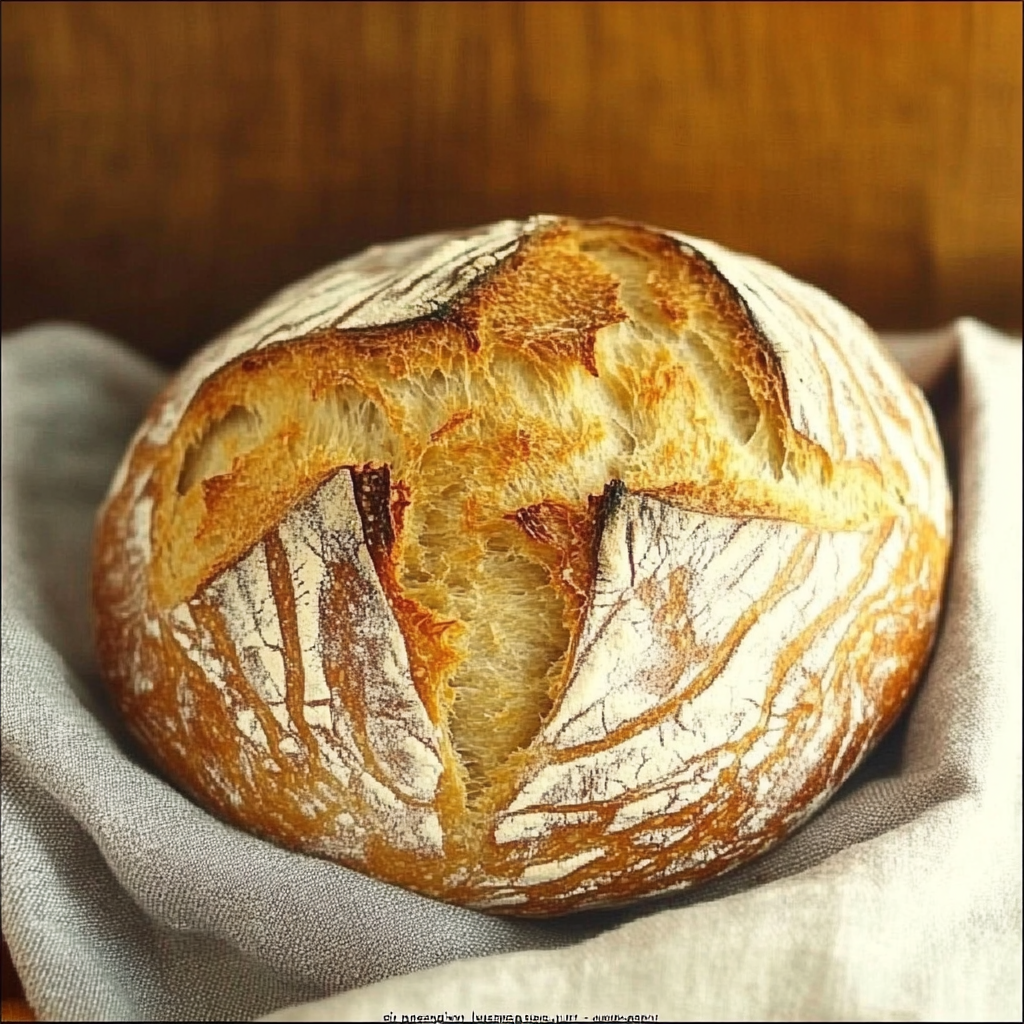
Sourdough bread is a rustic, naturally leavened loaf made with just flour, water, salt, and a wild yeast starter. Known for its tangy flavor, chewy interior, and crispy crust, it’s both a delicious and rewarding baking project. Unlike breads made with commercial yeast, sourdough relies on a slow fermentation process, which develops its deep flavor and enhances digestibility.
Why You’ll Love This Recipe
- Complex, Tangy Flavor: Developed through natural fermentation for that classic sourdough taste.
- Simple Ingredients: Just four staples—no commercial yeast required.
- Better Texture: Expect a chewy crumb and crackly crust.
- Longer Shelf Life: Natural fermentation helps the bread stay fresh longer.
- Digestive Benefits: Easier to digest due to the breakdown of gluten during fermentation.
Ingredients
(Tip: You’ll find the full list of ingredients and measurements in the recipe card below.)
- 500 grams bread flour
- 350 grams water (room temperature)
- 100 grams active sourdough starter (fed and bubbly)
- 10 grams salt
Directions

- Autolyse: In a large bowl, mix flour and water until no dry bits remain. Cover and let rest for 1 hour.
- Mix in Starter and Salt: Add the sourdough starter and salt to the dough. Mix thoroughly until well combined.
- Bulk Fermentation with Folds: Cover and rest the dough at room temperature for 4–5 hours. During this time, perform 3–4 sets of stretch-and-folds every 30 minutes during the first two hours.
- Pre-shape and Rest: Turn the dough onto a lightly floured surface. Gently shape into a round and let rest for 20 minutes.
- Final Shape and Proof: Shape the dough into a tight ball. Place in a floured banneton or bowl lined with a towel. Cover and let proof at room temperature for 1–2 hours or refrigerate overnight for a cold ferment.
- Preheat Oven: Place a Dutch oven in the oven and preheat to 475°F (245°C) for at least 30 minutes.
- Score and Bake: Carefully place the dough onto parchment paper. Score the top with a razor or sharp knife. Transfer to the preheated Dutch oven. Cover and bake for 20 minutes, then remove lid and bake for another 20–25 minutes until deeply golden.
- Cool: Remove bread from the pot and let cool on a wire rack for at least 1 hour before slicing.
Servings and Timing
- Servings: 1 loaf (approx. 12 slices)
- Preparation Time: 30 minutes
- Bulk Fermentation: 4–5 hours
- Final Proof: 1–12 hours (depending on cold proof)
- Baking Time: 45 minutes
- Total Time: 8–16 hours
Variations
- Whole Wheat: Replace up to 20% of bread flour with whole wheat for more flavor and nutrition.
- Seeded Crust: Roll the shaped dough in sesame, flax, or sunflower seeds before proofing.
- Herb and Garlic: Add fresh rosemary, thyme, or roasted garlic during mixing for a fragrant loaf.
Storage/Reheating
- Storage: Keep wrapped in a kitchen towel or in a bread box at room temperature for 2–3 days.
- Freezing: Slice and freeze in a zip-top bag for up to 2 months.
- Reheating: Toast slices or reheat a whole loaf at 350°F (175°C) for 10–15 minutes.
FAQs
What is a sourdough starter?
It’s a fermented mixture of flour and water containing natural yeast and bacteria, used to leaven bread without commercial yeast.
Can I use all-purpose flour?
Yes, but bread flour gives better structure due to its higher protein content.
How do I know when my starter is ready?
It should be bubbly, doubled in size, and pass the float test (a spoonful floats in water).
Why is my bread dense?
Possible causes include an inactive starter, under-proofing, or insufficient gluten development.
Can I bake without a Dutch oven?
Yes, but use a preheated baking stone and place a pan of hot water in the oven for steam.
How do I get big air pockets in my crumb?
Handle the dough gently, perform regular folds, and ensure proper fermentation.
Is sourdough healthier?
Yes, it has a lower glycemic index, fewer preservatives, and is often easier to digest.
Can I add flavors like olives or cheese?
Absolutely—add-ins should be folded into the dough during the bulk fermentation stage.
Why refrigerate the dough overnight?
Cold proofing improves flavor and makes the dough easier to score.
Can I skip the autolyse?
It’s optional but recommended, as it improves dough elasticity and final texture.
Conclusion
Sourdough bread is a rewarding bake that combines tradition, taste, and technique. With patience and practice, you’ll master this naturally leavened loaf and enjoy its rich flavor and perfect crust. Whether you’re new to baking or refining your sourdough game, this recipe is a great foundation for your bread journey.
Print
Sourdough Bread
- Prep Time: 1 hour (active)
- Cook Time: 45 minutes
- Total Time: 20 hours (including fermentation)
- Yield: 1 loaf 1x
- Category: Bread
- Method: Baking
- Cuisine: Artisan
- Diet: Vegan
Description
Sourdough Bread is a tangy, crusty loaf made through natural fermentation using a wild yeast starter. With a chewy interior and crisp crust, it’s a timeless, artisanal bread enjoyed on its own or in sandwiches.
Ingredients
- 500g bread flour (about 4 cups)
- 375g water (about 1 1/2 cups plus 1 tablespoon)
- 100g active sourdough starter (about 1/2 cup)
- 10g salt (about 2 teaspoons)
Instructions
- In a large bowl, mix the flour and water until combined. Cover and let rest for 1 hour (autolyse).
- Add the sourdough starter and salt. Mix until fully incorporated.
- Cover and let the dough rise at room temperature for 4–5 hours, performing stretch-and-folds every 30 minutes during the first 2 hours.
- After bulk fermentation, shape the dough into a tight ball and place in a floured banneton or bowl lined with a towel. Cover and refrigerate overnight (12–16 hours).
- Preheat oven to 475°F (245°C) with a Dutch oven inside.
- Turn the dough out onto parchment paper, score the top, and carefully place it in the hot Dutch oven.
- Bake covered for 20 minutes, then uncover and bake for another 20–25 minutes until crusty and golden.
- Cool on a wire rack for at least 1 hour before slicing.
Notes
- Use a kitchen scale for best accuracy.
- Experiment with whole wheat or rye flour for variation.
- A razor or bread lame helps achieve clean scoring lines.
Nutrition
- Serving Size: 1 slice (1/12 loaf)
- Calories: 180
- Sugar: 0g
- Sodium: 200mg
- Fat: 1g
- Saturated Fat: 0g
- Unsaturated Fat: 0.5g
- Trans Fat: 0g
- Carbohydrates: 38g
- Fiber: 2g
- Protein: 6g
- Cholesterol: 0mg