
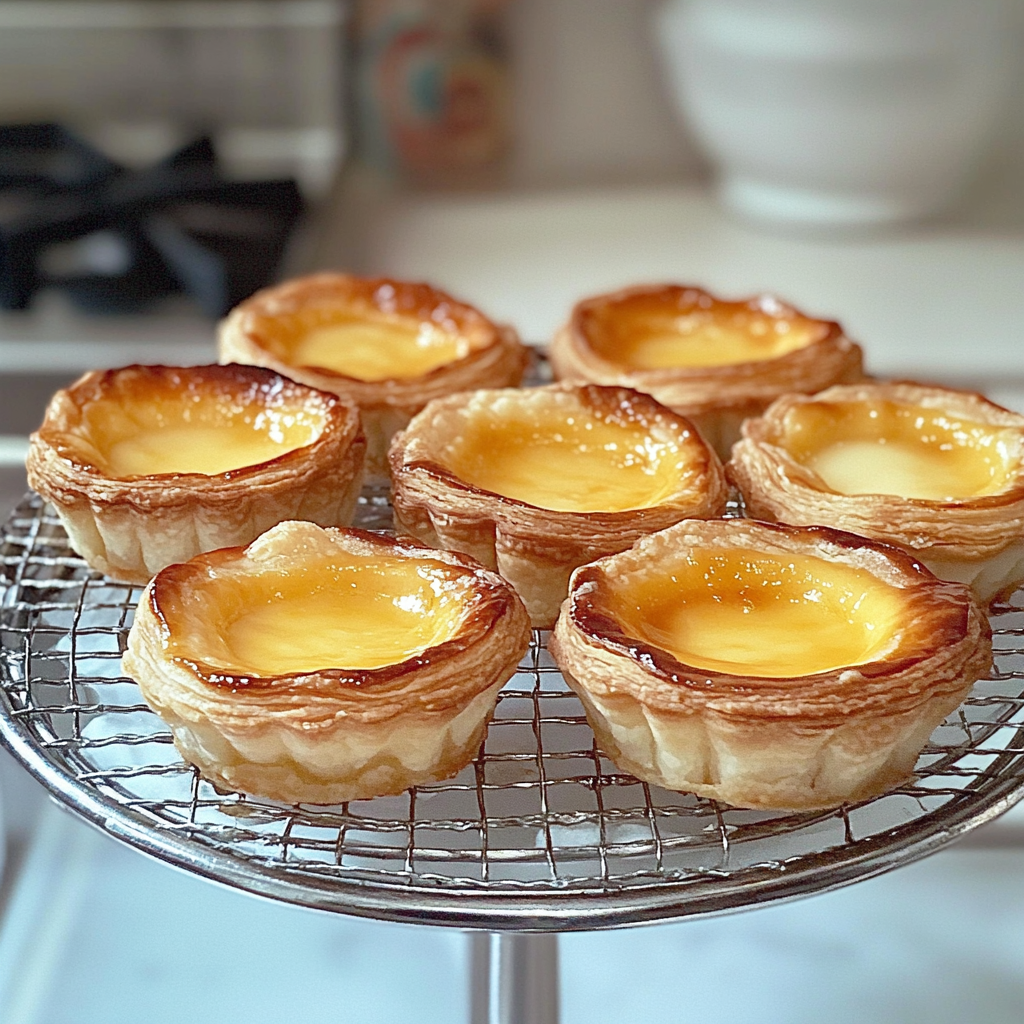
Portuguese Custard Tarts, known as Pastéis de Nata, are golden, flaky pastries filled with a rich, creamy custard and finished with a beautifully blistered top. With origins in 18th-century Lisbon, these iconic tarts have become a beloved dessert around the world. Their unique texture and flavor make them an irresistible treat for any occasion.
Why You’ll Love This Recipe
- Authentic Taste: Recreates the classic flavor of the original Lisbon pastry.
- Crispy & Creamy: The contrast of buttery puff pastry with smooth, rich custard is unbeatable.
- Easy to Make at Home: Uses simple techniques and ingredients.
- Visually Stunning: Caramelized tops and rustic layers make them a showstopper.
- Perfect for Sharing: Great for brunches, afternoon tea, or dessert trays.
Ingredients
(Tip: You’ll find the full list of ingredients and measurements in the recipe card below.)
- Puff pastry (store-bought or homemade)
- Whole milk
- Heavy cream
- Granulated sugar
- Egg yolks
- Cornstarch
- Vanilla extract or vanilla bean paste
- Lemon zest (optional)
- Ground cinnamon (optional)
Directions

- Prepare the Pastry:
- Roll out the puff pastry into a rectangle and tightly roll it into a log from the short side.
- Slice into 12 equal pieces and press each into a muffin tin, working it into a cup shape with your thumbs.
- Chill in the fridge while making the custard.
- Make the Custard:
- In a saucepan, whisk together milk, cream, sugar, cornstarch, and a pinch of salt.
- Heat over medium, stirring constantly, until the mixture thickens slightly.
- Remove from heat and stir in egg yolks, vanilla extract, and optional lemon zest or cinnamon.
- Strain the custard to remove any lumps and cool slightly.
- Assemble the Tarts:
- Preheat your oven to 475°F (245°C).
- Fill each pastry shell with custard, leaving about ¼ inch from the top.
- Bake for 15–20 minutes, until the custard is set and the tops are blistered and caramelized.
- Cool and Serve:
- Let tarts cool in the tin for 5 minutes before transferring to a wire rack.
- Serve warm or at room temperature, optionally dusted with cinnamon or powdered sugar.
Servings and Timing
- Servings: 12 tarts
- Prep Time: 25 minutes
- Cook Time: 20 minutes
- Total Time: 45 minutes
Variations
- Citrus: Use orange zest instead of lemon for a warmer citrus flavor.
- Cinnamon-Infused Milk: Simmer the milk with a cinnamon stick for a deeper spice note.
- Mini Tarts: Use mini muffin tins for bite-sized versions.
- Chocolate Swirl: Add a bit of melted dark chocolate to the custard for a rich twist.
- Coffee Custard: Infuse the milk with a teaspoon of instant espresso for a subtle mocha flavor.
Storage/Reheating
- Storage: Store in an airtight container at room temperature for up to 2 days or refrigerate for up to 4 days.
- Reheating: Reheat in a 350°F (175°C) oven for 5–7 minutes to restore the crisp pastry.
- Freezing: Best enjoyed fresh, but you can freeze baked tarts for up to 1 month. Reheat directly from frozen in the oven.
FAQs
Can I make the custard ahead of time?
Yes, you can prepare the custard a day in advance and store it in the refrigerator until ready to use.
Why does the custard need to be strained?
Straining removes any lumps and ensures a silky-smooth texture in the finished tarts.
Can I use phyllo dough instead of puff pastry?
It’s not traditional, but it can work. Layer several buttered sheets of phyllo to create a crisp shell.
Why is my custard runny?
It likely wasn’t cooked long enough to thicken. Make sure it coats the back of a spoon before removing from heat.
How do I get the signature caramelized top?
Bake at a high temperature (around 475°F) to blister the custard. A quick broil at the end can help if needed.
Can I make these gluten-free?
Yes, just use gluten-free puff pastry and ensure all other ingredients are gluten-free.
What’s the difference between Portuguese Custard Tarts and egg tarts?
Portuguese tarts have a caramelized top and flaky puff pastry, while Asian-style egg tarts typically have a smooth surface and shortcrust base.
Is it necessary to roll the puff pastry into a log?
Yes, this technique helps create the signature spiral layers in the tart crust.
Can I flavor the custard differently?
Absolutely. Try almond extract, orange zest, or even a splash of rum for a unique twist.
Are these best served warm or cold?
They’re best enjoyed slightly warm or at room temperature for the perfect texture and flavor.
Conclusion
Portuguese Custard Tarts are a delicious way to bring a taste of Portugal into your kitchen. With their crispy pastry shells and creamy, caramelized custard filling, these iconic treats are as delightful to make as they are to eat. Whether for a special occasion or a casual afternoon snack, they’re sure to impress.
Print
Portuguese Custard Tarts (Pastéis de Nata)
- Prep Time: 20 minutes
- Cook Time: 15 minutes
- Total Time: 35 minutes
- Yield: 12 tarts 1x
- Category: Dessert
- Method: Baking
- Cuisine: Portuguese
- Diet: Vegetarian
Description
Portuguese Custard Tarts, also known as Pastéis de Nata, are a traditional Portuguese pastry made with flaky puff pastry and a rich, creamy egg custard filling, baked until caramelized on top.
Ingredients
- 1 sheet puff pastry (thawed if frozen)
- 1 cup whole milk
- 2 tablespoons all-purpose flour
- 1 cup granulated sugar
- 1/3 cup water
- 6 large egg yolks
- 1 teaspoon vanilla extract
- 1 cinnamon stick
- Zest of 1 lemon
Instructions
- Preheat oven to 500°F (260°C). Grease a 12-cup muffin tin or custard tart molds.
- Roll out puff pastry into a log and cut into 12 equal slices. Press each slice into the muffin tin, flattening and shaping into a cup up the sides.
- In a saucepan, whisk together flour and a few tablespoons of milk until smooth. Add the rest of the milk and whisk over medium heat until thickened. Remove from heat.
- In another pan, combine sugar, water, cinnamon stick, and lemon zest. Bring to a boil without stirring and cook until it reaches 220°F (104°C) on a candy thermometer. Remove cinnamon stick and zest.
- Slowly whisk the sugar syrup into the thickened milk mixture.
- In a bowl, whisk egg yolks, then slowly add to the warm custard mixture along with vanilla extract. Strain the mixture to remove any solids.
- Pour the custard into the prepared pastry shells, filling about 3/4 full.
- Bake for 12–15 minutes or until the tops are caramelized and blistered. Let cool slightly before removing from tin.
- Serve warm or at room temperature with a dusting of cinnamon if desired.
Notes
- Use a very hot oven to achieve the signature caramelized tops.
- Don’t overfill the tart shells to prevent overflow.
- They are best eaten the day they’re made but can be stored in the fridge and reheated.
Nutrition
- Serving Size: 1 tart
- Calories: 210
- Sugar: 18g
- Sodium: 70mg
- Fat: 11g
- Saturated Fat: 4g
- Unsaturated Fat: 6g
- Trans Fat: 0g
- Carbohydrates: 24g
- Fiber: 0g
- Protein: 3g
- Cholesterol: 105mg